- Home & Living
- Yakushigama
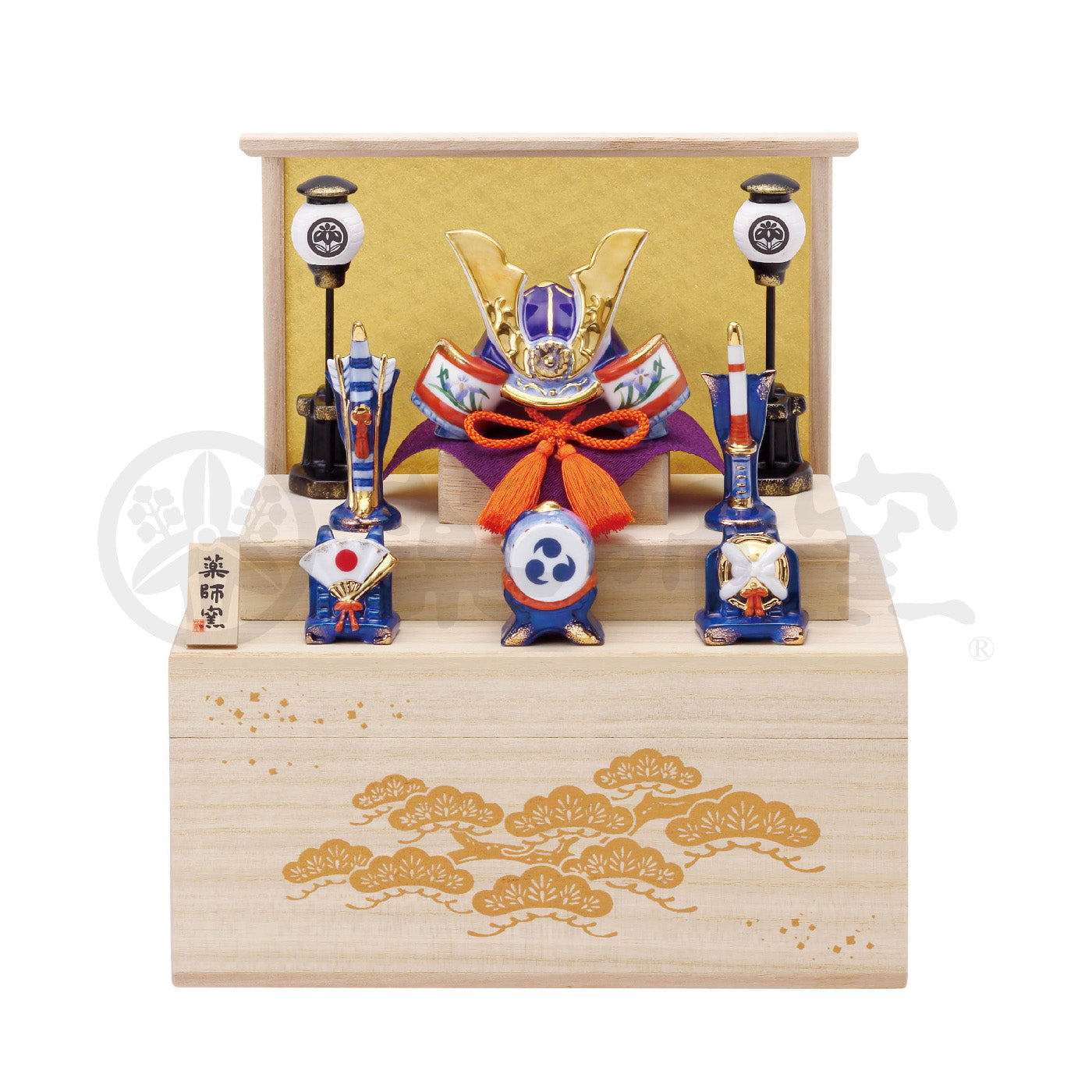
Sometsuke Nishiki Success Kabuto (Shōbu, Small) with Paulownia Storage Box Base
染錦出世兜(尚武小・収納桐箱台付)
The kabuto is finished with an orange cord, symbolizing daidai (“generation after generation”), expressing a wish for lasting family continuity and prosperity.
The iris (shōbu) has traditionally been used during Children's Day (May 5th) as a plant believed to ward off evil. Its name is associated with words meaning “martial spirit” and “victory,” and it carries wishes for a boy’s healthy and strong growth.
Made of ceramic, the kabuto is durable, resistant to aging, and easy to care for, making it a convenient decorative piece to display and enjoy.
※As this is a special-order item, please allow approximately 15 business days before shipment. Processing and delivery times may be longer depending on stock availability.
For inquiries regarding stock availability, please contact us via "Contact Us."
If this item is ordered together with in-stock items, the products will be shipped separately.
Customs duties are borne by the customer.
Click here for details on customs duties.
Please note that purchased items cannot be returned.
Click here for details on returns.
All items are shipped directly from each brand.
If you purchase products from multiple brands, they will be delivered in separate packages. Please note that shipping fees may be charged separately and could be higher than usual.
We appreciate your understanding.
Couldn't load pickup availability
| Material | Ceramic |
| Country of origin | Japan |
| Length |
Kabuto (helmet): 6.5 cm 2.56 inches
Paulownia (storage box): 16.5 cm 6.50 inches
|
| Width |
Kabuto (helmet): 8.5 cm 3.35 inches
Karabitsu (storage box): 22 cm 8.66 inches
|
| Height |
Kabuto (helmet): 6.5 cm 2.56 inches
Karabitsu (storage box): 10 cm 3.94 inches
Display (assembled): 23 cm 9.06 inches
|
| Weight | 740g |

Story
The brand name “Yakushigama” comes from a small shrine dedicated to Yakushi Nyorai (the Buddha of Healing), believed to have been created by the monk Gyoki. This shrine stood on the grounds of Chugai Toen until the late Edo period.
Boy’s Day Decoration (Gogatsu Ningyo)
Tango no Sekku (Boys’ Day), now celebrated as Children’s Day on May 5, became associated with boys during the Kamakura period. Iris leaves, believed to ward off evil, are also associated with the word shobu (meaning both “iris” and “martial spirit”), which helped establish the tradition.
Gogatsu dolls and decorations symbolize wishes for a boy’s healthy growth, strength, and the prosperity of the family.
Yakushigama’s seasonal items also include popular figures such as Momotaro and Kintaro, making them enjoyable as decorative pieces.
Brand
Yakushigama
The name “Yakushigama” traces back to a small shrine dedicated to Yakushi Nyorai, the Buddha of Healing, which once stood on the grounds of Chugai Toen until the late Edo period.